FIELD NOTES #1: How I See Things Now
For most of my adult life, I thought of education as a systems problem. Policy. Governance. Accountability. Reform. I lived inside arguments about standards, school choice, outcomes, and incentives. I believed that if we could get the structures right, people would benefit downstream.
That work mattered, and I don’t disown it. But over time, it began to feel thin. The conversations narrowed. The imagination shrank. Education became something to win rather than something to practice together. I could feel myself getting better at arguments while growing further from people.
Then the political ground shifted. A right-wing consolidation of power reshaped education work nationwide. Philanthropy retreated. Equity work became a liability. Funding dried up. The role I had played for years, often as a digital enforcer for narrow political strategies, quietly disappeared.
That loss forced a reckoning I could no longer avoid or spiritualize away.
I had to sit with questions I had postponed for a long time. Who am I without the work? What do I actually believe? What kind of contribution does my faith require when influence, access, and certainty are stripped back? My reading of Gospel leaves little room for abstraction once power is removed from the equation.
Around that time, I found myself returning to Tracy Chapman’s punctuated moral clarity in one of my favorite songs:
Don’t be tempted by the shiny apple
Don’t you eat of a bitter fruit
Hunger only for a taste of justice
Hunger only for a world of truth
’Cause all that you have is your soul.
That last line. All that you have is your soul. Damn.
I was sharp and clear about my educational ideas (I still am), but my clarity in one area was stifling in another: I was losing something more personal, which was my curiosity. The ability to see. The habit of wonder. Not just education abstracted from humanity.
I won’t abandon education. I don’t renounce my belief that it is the one big lever we are pulling to repair and improve the world and make it fairer. Yes, it must have standards, be evidence-based, be measured, and well-stocked with interventions when entire groups of students are being left behind. The essentials of my educational theology remain. I am agnostic about educational methods, but religious about outcomes.
And at the same time, pursuing photography as a soothing side project has made the ethical core of education clearer to me. It has slowed me down. It required me to look longer than was comfortable. To compose instead of react. To notice what I had trained myself to overlook. To sit with contradiction without forcing it into a conclusion.
I have come to believe that education is less about institutions than it is about formation. It is about learning how to see context and contours, how to recognize the full humanity of others, especially when that recognition complicates our certainty.
What follows are little Field Notes.
They are not essays, and they are not arguments. They are short, distilled reflections from the road. I am using micro-essays to reduce my learning to its essential core, without stripping away the poetry, discomfort, or grace of lived experience.
These photographs and the words paired with them are part of my re-education. They are teaching me how curiosity reshapes conviction, how empathy sharpens rather than dulls moral clarity, and how faith becomes real only when it is practiced in how we see one another.
The Trouble With Good People
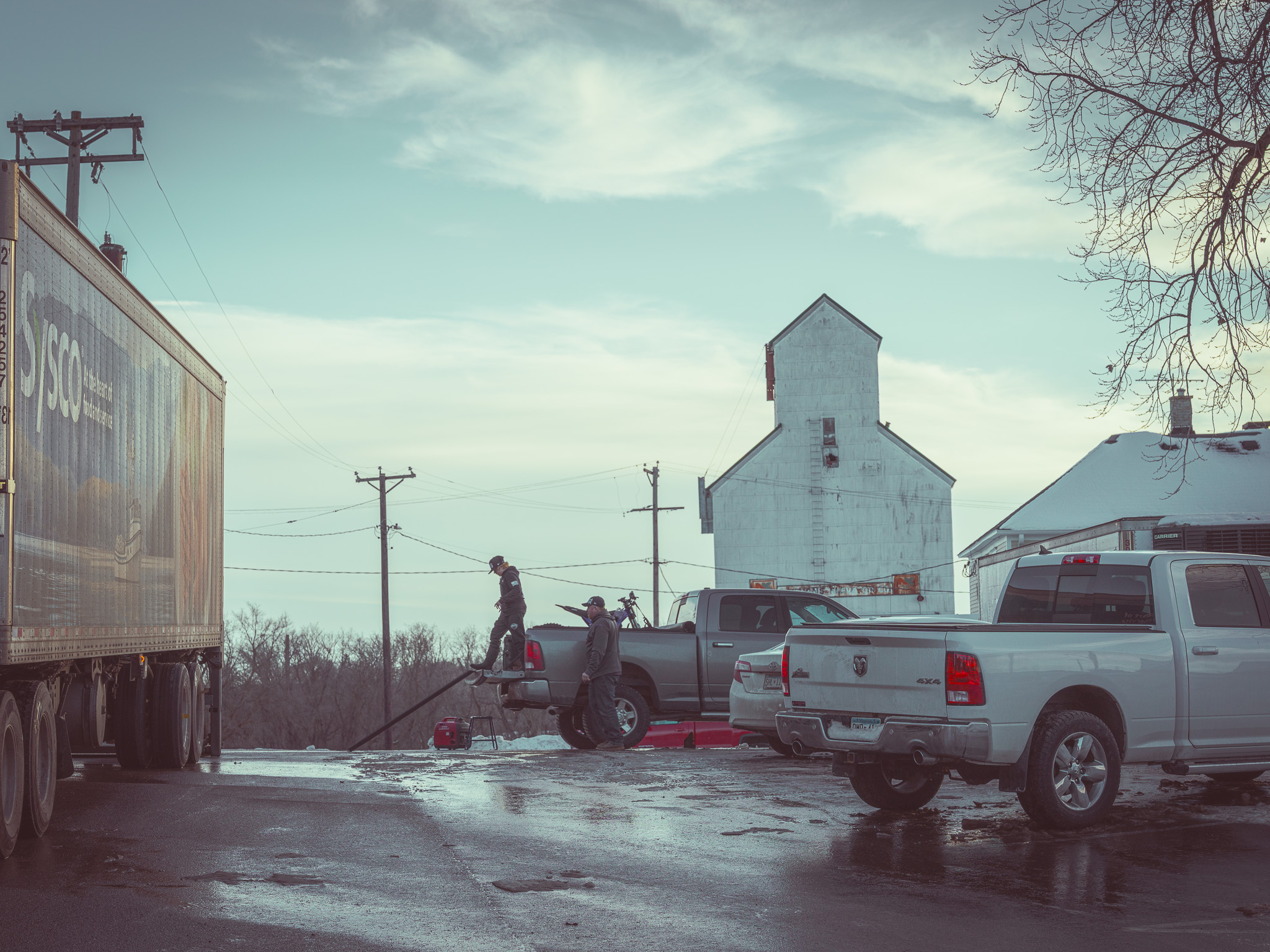
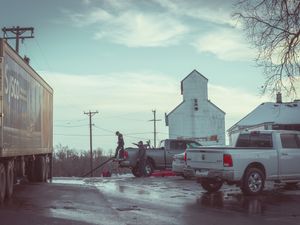
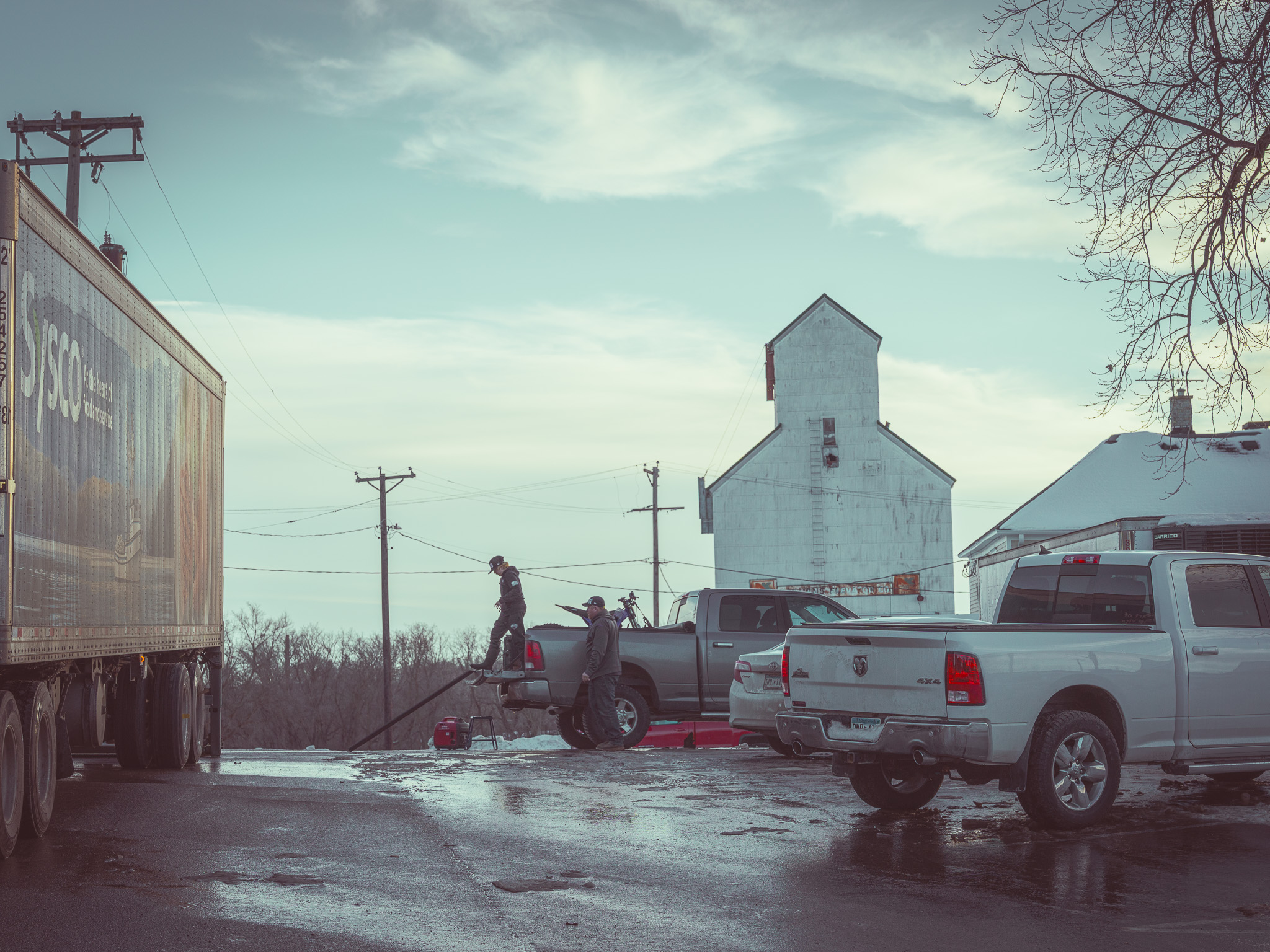
This photograph is of a father and son in a rural Minnesota town—one full of Trump flags and American flags, churches and Christian iconography, pickup trucks and gun talk. It’s an idyllic place, the kind of town a movie might romanticize as the “real” America.
Simplicity here is framed as virtue. The partiality of that vision—how it excludes while pretending to be universal—often goes unnamed.
And still, there is a father. There is a son. There is work being done. There is care, duty, affection, and routine. Real human texture.
If we were to share a table, I suspect I’d find in them a sense of themselves as good people—earnest, decent, straightforward. History tells me that people who supported the most terrible things rarely believed they were terrible. In their minds, God was on their side.
During segregation, those who defended it still loved their children, celebrated birthdays, tended gardens, went to church, fell in love, and grieved their dead. They lived full human lives while participating in—or benefiting from—systems that were grotesquely dehumanizing.
To the people they crushed, they were monstrous. To themselves, they were upright, hardworking, moral victors. I sit uncomfortably in that lopsided gap of perception.
Whether we admit it or not, we are living through another escalation of the same malignant spirit that has surfaced repeatedly in this country—the spirit that once watched calmly from church windows while whips cracked; that swindled Indigenous people, interned the Japanese, blackballed the Jew, limited the woman, chained the Chinese, and segregated the Chicano into poisoned parts of cities.
The same spirit—dirty and grotesque—now wearing fresh lipstick made of slave blood and the tears of inmates.
Today it hunts families under the cover of legality, delighting in pursuit, calling terror “order” and cruelty “strength.” It works to roll back every structural gain that made this country slightly more humane, then insists that the worst parts of us are the best parts of us.
I don’t pretend neutrality. I know where my moral vision places good and bad. I am not confused by pretty pictures of ugly realities.
But age and wisdom demand that I recognize certainty as the incubator of its own cataract.
If I decide there is nothing human left in those I oppose, I mistake judgment for justice.
It isn’t mine to judge as God can, or to condemn as if my voice were final. The real war isn’t between cities and small towns, or red and blue—it’s between love and hate, humanity and evil. That war can be lost inside any of us, including those in this picture, and the person behind the camera.
As much as I resist admitting it, conviction animates people more powerfully than truth. And the one truth that will outlive all others is that love and solidarity remain the only effective counterweights to the cruelty that lives in all of us.
[Shot with A7R V, Kimball, Minnesota, December 2025]
The Interruption I Almost Missed
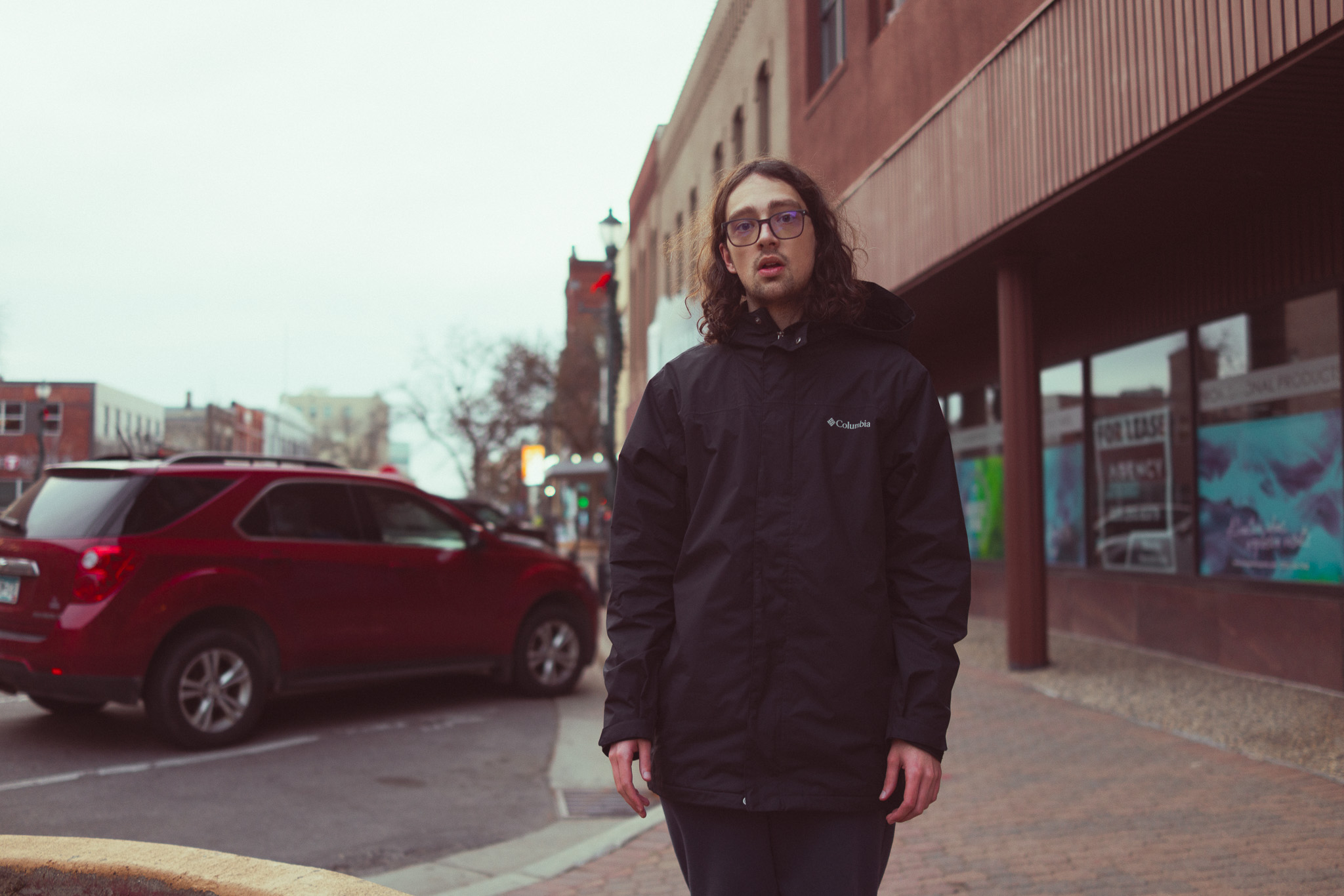
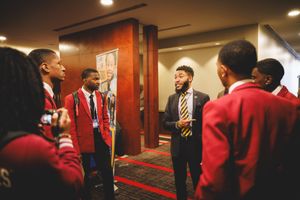
I met this young man while I was setting up a shot outside a vintage clothing store. I had framed the scene just the way I wanted it and was waiting for a passerby to complete the picture. He walked right into my composition—perfect timing—but I misfired and didn't capture it.
Frustrating, but typical.
Instead of getting the photo, I got him.
He stepped around the clothing rack and started talking to me, asking what I was shooting, what I looked for, what story I was trying to tell. Then he told me about his own interest in photography, but especially filmmaking. His references were outside my world—generational, cultural, and hella niche. It was like someone suddenly asking me to compare anime subgenres at an age when I need an AirTag on my keys.
I went blank.
It wasn't the content of our interaction that stood out. It was his delivery. His affect. His cadence and word choice.
I’ve learned, over years working in social services, to recognize specific cognitive patterns—not as deficits but as differences. And I’ve also learned how often those differences are met with avoidance, impatience, or outright dismissal. People look away. They rush the conversation. They give half-responses as if the person in front of them isn’t fully deserving of attention.
I won't lie, my base instinct would be to do the same. I was busy. I was in the middle of something requiring my full attention. But being dismissive would’ve betrayed the person I’m trying to be.
Sometimes I think God tests me exactly this way, by sending someone into my frame, into my plans, into my solitude, to see whether I’ll choose convenience or compassion. Whether I’ll treat someone as an interruption or a gift.
I paused. I listened. I asked questions back. It was a weekend, and I wasn’t really in a hurry. In those few minutes, I wondered about the films in his head, the stories he might tell if someone gave him the equipment and the space to try. The world has a habit of overlooking artists who don’t present in familiar packages. But our most original thinkers often come from the edges.
Mid-sentence, he got a call from a family member. “I gotta go,” he said, and sprinted away like a person a few years younger than he appeared to be.
He was gone, but the thought he left behind wasn’t.
I didn’t get the photograph I was waiting for. I got a better one. It's a reminder that every stranger who walks into my frame arrives with a story. And some of those stories never get told because of my fake busyness. Because I can be too busy, too distracted, or too self-important to hear them.
So that’s why this young man—whose name I don’t know, whose work I’ve never seen—is now on my list of favorite filmmakers. Because I saw a spark. Because difference is not deficiency. Because some artists announce themselves long before the world ever sees their art.
Because I want to be an early adopter, as God has been with me.
And because sometimes the most accurate picture isn't the one I take, but the one that takes me.
[Shot with Sony RX1R II, Downtown St. Cloud, Fall 2025]
The Middle Is Where the Work Is
I’m a before-and-after person. I love transformation photos of renovations and restorations, weight-loss journeys, and old photos of historic streets next to their modern selves. I love the clean contrast between "here’s what it was" and "here’s what it is."
No mess, no middle. Just from this to that.
But that love is also a blind spot. Because the middle—the process—is where all the real magic happens. At least for those of us not gifted in the arts of renovation, it is magic of some sort.
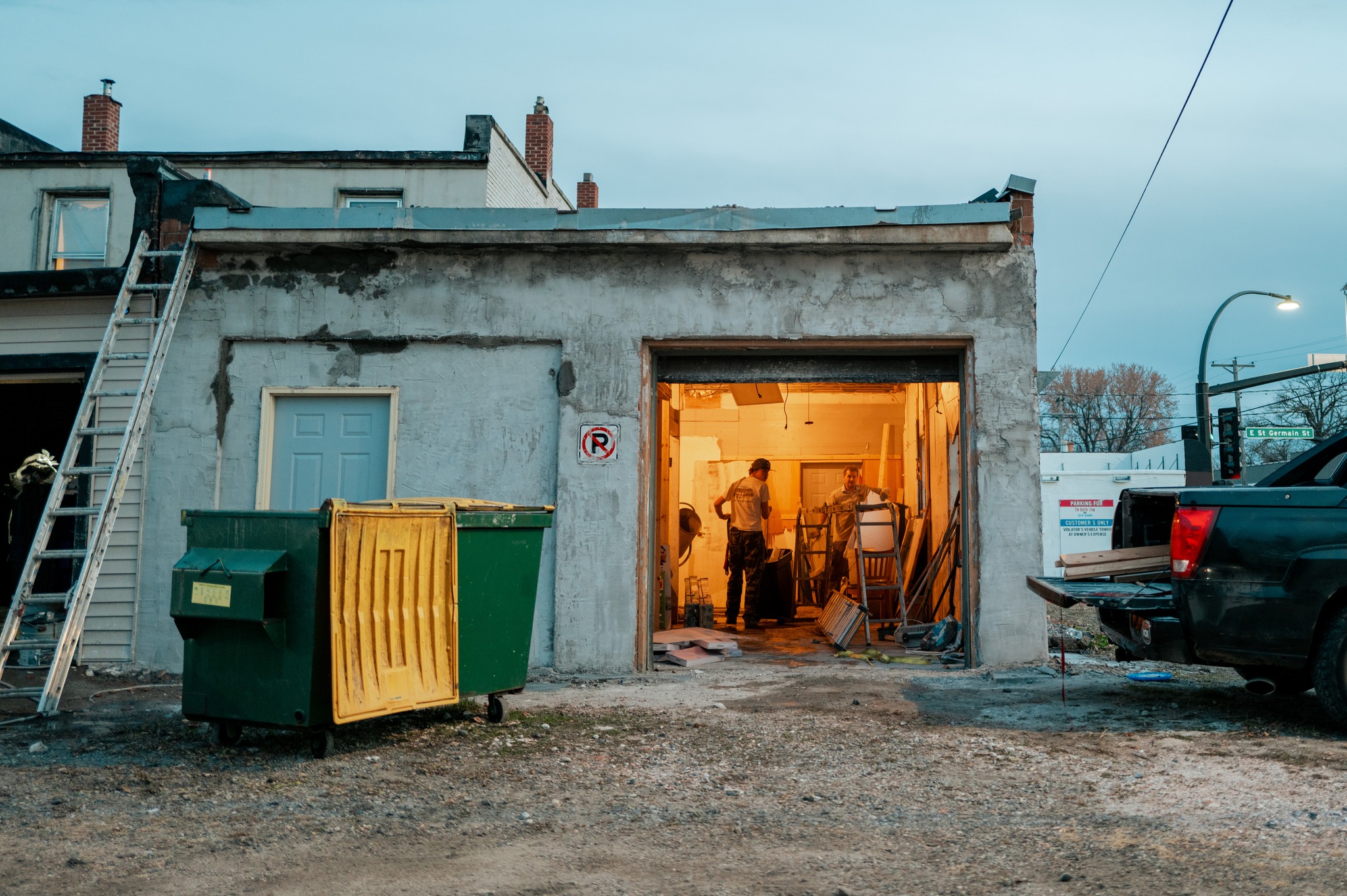
This photo stopped me for that reason. Rustic Remodels, a local crew, working in the thick of the “middle.” The hard work. The hard workers. The folks who might as well be magicians to me, because I have no idea how you get there from here.
It’s not for lack of admiration. I grew up wanting to be as handy as my grandfathers and as industrious as my uncles. But whatever carpenter’s gene they had skipped me entirely. Electrical work, plumbing, sheetrock, insulation—anything beyond demolition—I’m lost.
Give me an IKEA cabinet to put together, and I guarantee it will end with extra parts and a leaning piece of furniture.
So when I see people doing this work, I vicariously experience it. I’m curious. I want to understand how ruins become something new. And I know that if I come back in a few weeks, this raw space will be something entirely different. Something better. More beautiful.
And that’s the lesson hiding in plain sight.
To get from here to there—from broken to restored, from vision to reality—requires exactly what’s happening in this frame. First a vision, then a plan, then execution. Tools that have stood the test of time. Skills learned slowly. Demolition of what no longer serves. Patience with setbacks. Persistence in the mess. Faith in the final form, even when the middle looks nothing like it.
I talked briefly with one of the guys—the owner. He asked why I was taking pictures. I didn’t have time to say it’s because I respect the work and secretly wish I knew how to do it. That at my age, there’s probably no time to learn it between kids and bills and career demands and a life that seems like I’m stuck forever in the before part.
But I did ask if he ever needs help with photos or social media.
He said yes.
So who knows. Maybe this before-and-after is still in progress, too.
[Shot with Leica Q3, East St. Cloud, November 2025]
Learning to Belong Where I Live
I’ve met more people in my town in the past six months than I met in the previous ten years combined.
Travel will do that to you. You give your energy to other cities, other people’s worlds, then come home drained, wanting nothing but quiet and the safety of your own four walls. I kept my circle tight for that reason—and because this place didn’t feel like it had many of “my people.” Whatever that means.
But somewhere along the way, my heart shifted. My soul stirred for something more rooted.
I wanted to know where I lived, not just sleep here. To understand it beneath the stereotypes and the easy narratives. Because, like everywhere else, this area has stories buried under the pavement.
A region shaped by suspicion, when the state clustered German immigrants together during wartime and monitored them. A city that once held dueling newspapers—one run by an abolitionist woman, the other by Southern migrants who eventually burned her press and threw it into the river. There are ghosts here. And most people don’t know their names.
Now much of that history is paved over with rapid oil changes, nail salons, discount retailers—everything signaling distance from “real” cities. Although to the farming towns around us, we are the real city.
For years I believed the caricatures. Especially the ones told proudly in Minneapolis and St. Paul, where people can’t help but look down on St. Cloud. An odd stance, considering those cities are where George Floyd was murdered and where national reports say they’re among the best places to raise a family—unless the family is Black.
But as I wandered with my camera, my assumptions cracked. People here work hard. Take pride in what they own. They are friendlier and more complex than I allowed myself to see.
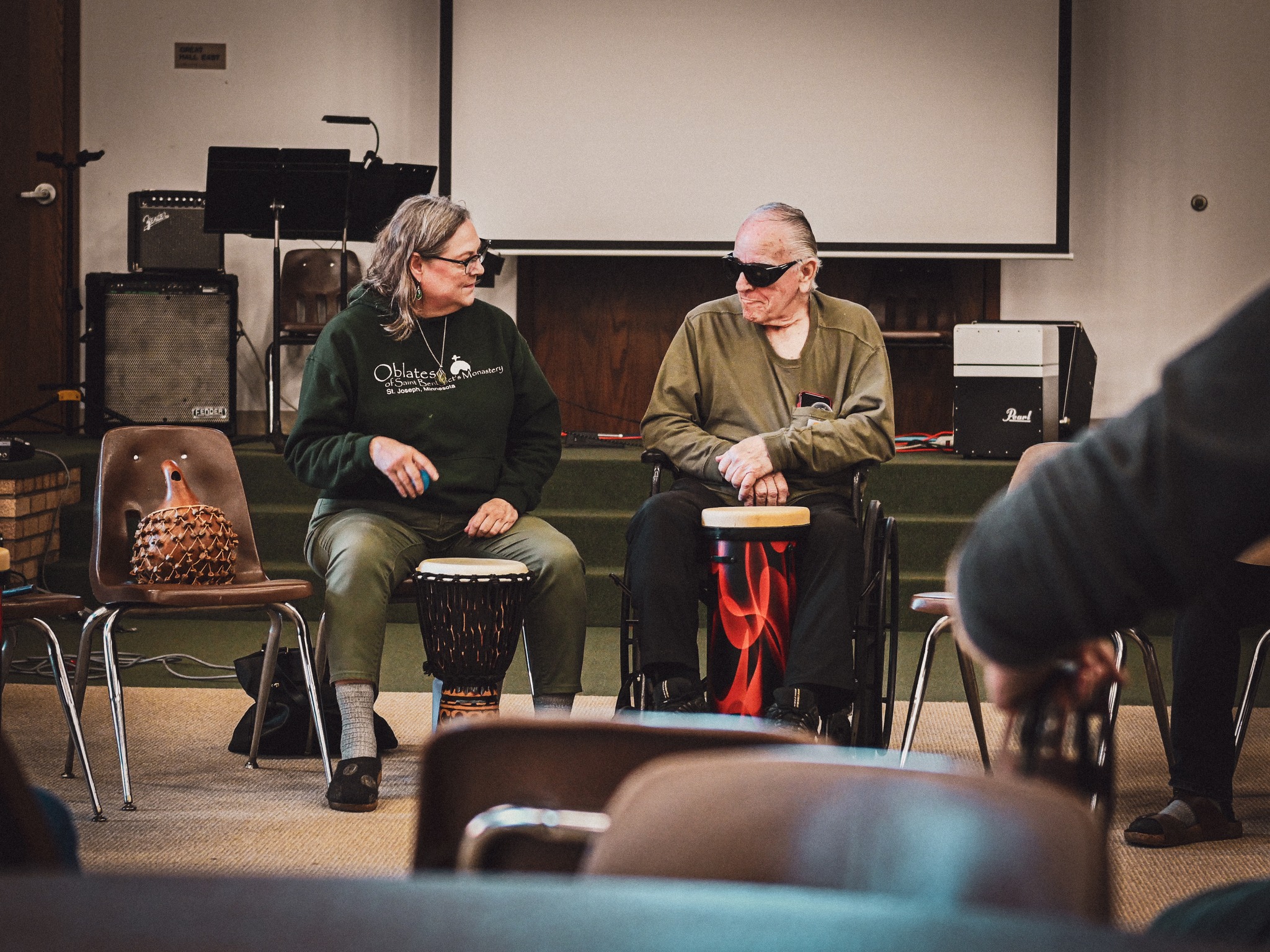
Which is why, when I looked up local events for one of my “day-cations,” I said yes to something I would’ve ignored for years: a community drum circle at Salem Lutheran Church.
Open to all, no experience required, come as you are.
So I went.
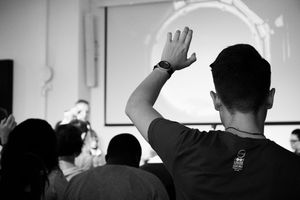
It was warm. Welcoming. A mix of ages and abilities. A room of people who simply wanted to be together and make something together. Anyone could lead the rhythm; everyone else tried to meet them where they were. A living metaphor for the community we always say we want but rarely practice.
I didn’t drum. I stayed at the edge, observing as a tourist in a world I’m slowly allowing myself to enter.
But later, I realized something important:
Every unexpected stop has been rewriting me. Chipping away at old prejudices. Softening assumptions. Installing a new operating system.
I'm beginning to believe that God put cameras in my hands again so that I would see a bigger picture. I'd widen my aperture, change my lenses, focus in on His subjects, and realize more than I could with the naked eye.
In a world where cruelty is loud, and connection feels fragile, the quiet good is still here. People still gather. Still care. Still show up with humility. Still build community one beat at a time.
[Shot with Nikon Z fc, East St. Cloud, Fall 2025]